
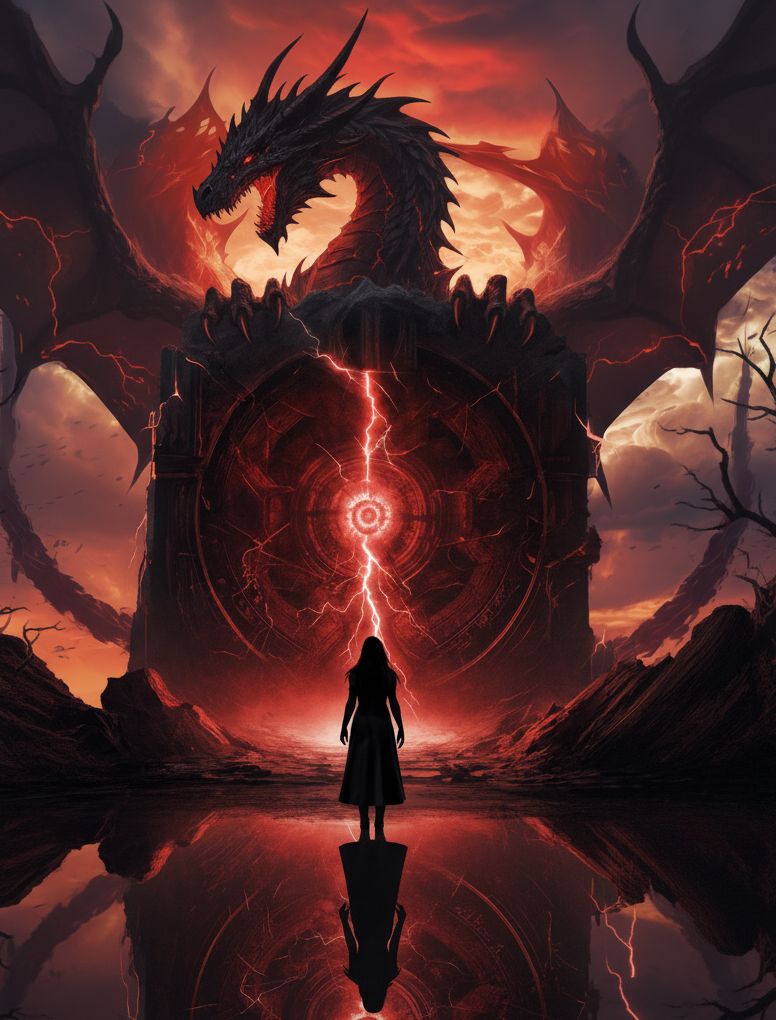

There is a particular hunger that epic fantasy satisfies when it dares to intertwine the clash of steel with the ache of desire. Too often, the genre treats romance as an afterthought, a decorative subplot to appease certain demographics while the “real” story of battles and political scheming unfolds. I refused to accept this dichotomy when I crafted The Fifth God saga. In my world of L’ven, love is not a distraction from the stakes; it is the very fuel that drives kingdoms to war, sorceresses to vengeance, and ordinary men to become legends.

The foundation of fantasy romance for men rests on a simple truth: passion hits harder when the world is falling apart. When I wrote Black Dragons, the first book in The Fifth God series, I wanted to explore what happens when desire collides with duty at the edge of a sword. Janosh the Mountain does not simply fight dragons and ancient sorceresses, he navigates the treacherous waters of courtly affection while the king’s daughter sets her eyes on him, and a mysterious queen from distant shores arrives with catastrophe in her wake. These are not trivial romantic diversions; they are gravitational forces that pull at the fabric of his destiny.
What separates compelling fantasy romance from forgettable fluff is stakes. In The Fifth God: Magic of the Soul, the second installment, two lovers dream of marriage while noble families conspire to tear them apart. Their affection is not happening in a vacuum, it unfolds against the backdrop of an unstoppable army, griffon riders darkening the skies, and the very real possibility that the world may end before their vows can be spoken. This is the kind of romance that resonates with readers who appreciate both the thunder of hooves and the thunder of hearts racing.
The genre has long suffered from a false perception that male readers only want bloodshed and that romance somehow dilutes the experience. My response to this was Hagala, the ancient sorceress who drives the central conflict of The Fifth God saga. Her motivation is rooted in the most primal of human experiences: unrequited love. Exiled for a thousand years, burning with the bitter memory of affection denied, she returns to L’ven not merely as a villain but as a warning of what happens when love curdles into obsession. She commands black dragons, wields dark artifacts capable of summoning gods of destruction, and her every action is traceable back to that original wound. This is romance as catastrophic force.
I have always believed that the best fantasy romance for men operates on multiple frequencies simultaneously. When you open The Fifth God books, you encounter love triangles that matter, not the trivial sort found in young adult fiction, but situations where choosing one path means sacrificing kingdoms. Janosh finds himself caught between the princess whose power could secure his future and the foreign queen whose arrival brings both opportunity and peril. These relationships are not about longing glances across ballrooms; they are about alliances that determine whether cities burn or stand.
The Slavic mythology that infuses my world adds a particular texture to how romance unfolds in L’ven. This is not the sanitized courtly love of Arthurian legend. The creatures that populate these lands, water nymphs, dryads, the hos’sanani who are part human and part great cat, bring with them different understandings of desire, possession, and bonding. When characters fall in love in The Fifth God saga, they do so within a cultural framework that recognizes passion can be as dangerous as any spell. The magic system itself, divided between sorcery, witchcraft, priestly devotion, and druidic power, mirrors the different ways people connect with one another, some through calculation, some through faith, some through raw elemental force.
What I set out to prove with this series is that fantasy romance for men can be muscular without being shallow. The physical intimacy in The Fifth God books exists on the same spectrum as the violence, earned, consequential, and never gratuitous. These are new adult fantasy novels intended for readers who have outgrown the black-and-white morality of younger fiction. When characters come together, they carry with them the weight of their pasts, the urgency of their present dangers, and the uncertainty of whether they will survive to see morning. That is the kind of romantic tension that keeps pages turning.
The reception to this approach has validated my instincts. Readers consistently point to the emotional depth of the characters as what separates The Fifth God from other entries in the epic fantasy genre. They speak of Janosh’s skepticism about his own legend, of the impossible choices between love and loyalty, of the way power and sacrifice intertwine in relationships forged under extreme circumstances. These are not readers looking for escapist fluff, they are looking for stories that acknowledge the full spectrum of human experience, including the parts that make us vulnerable.
As I continue working on The Gate, the third book in The Fifth God saga, I am pushing these themes even further. The romantic subplots that began in Black Dragons and deepened in Magic of the Soul are reaching their crescendos. Characters who have danced around their feelings must finally choose. Political intrigues that have kept lovers apart are reaching breaking points. And through it all, the threat of the Fifth God’s arrival looms, a reminder that love, like everything else in L’ven, exists under the shadow of apocalypse.
For those who have grown tired of fantasy that treats romance as an afterthought, The Fifth God saga offers an alternative. These are books where the relationships between characters are as complex and dangerous as the magic they wield. Where falling in love can be as transformative as discovering you have the power to shape reality. Where the choices made in the heart’s chambers echo through throne rooms and battlefields with equal force. This is fantasy romance that understands men want stories where emotion amplifies rather than replaces adventure, where warlords’ lust is not a weakness to be overcome, but a force that shapes destinies.
Trebate biti prijavljeni kako bi objavili komentar.