
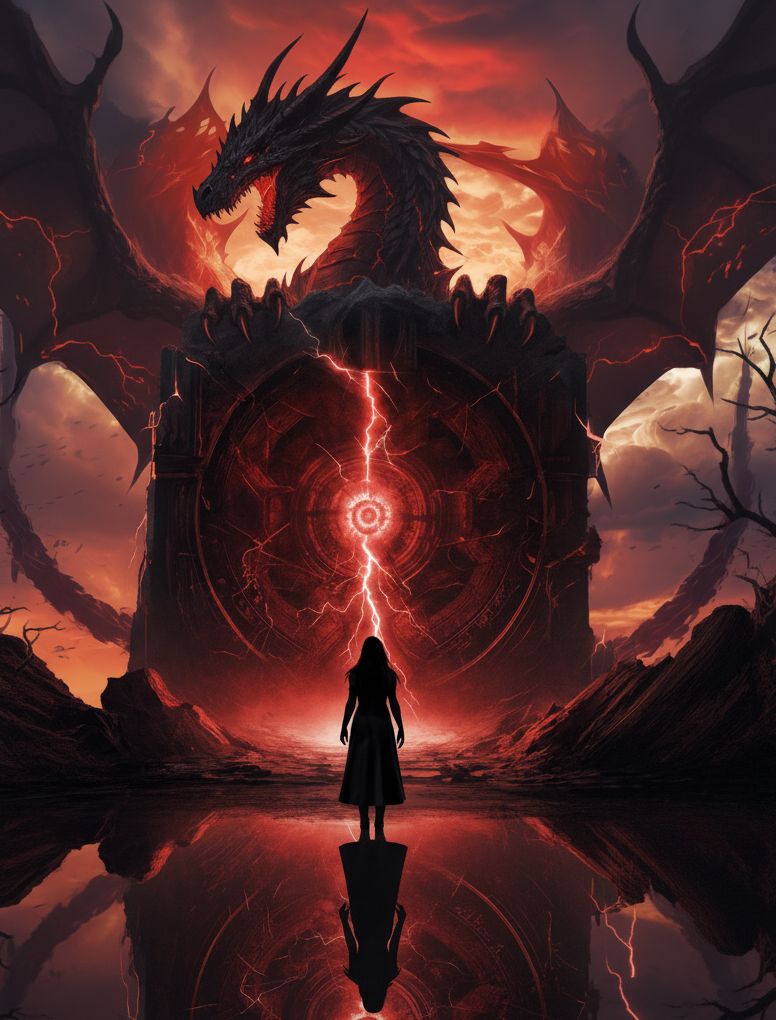
Stories bigger than reality have always lived inside me, and now I let them speak for themselves.
Dalibor Kovačec is an author of Slavic epic fantasy romance for men, known for the gritty and immersive world of The Fifth God saga. Drawing deeply from Balkan folklore and Slavic mythology, his stories bridge the gap between high-stakes adventure and meaningful male-POV romantasy.

Writing for readers who demand more than just a subplot, Dalibor crafts stories where a competent male lead navigates dark magic, ancient gods, and a central, slow-burn romance. If you enjoy the atmosphere of The Witcher but crave a deeper focus on the romantic bond from a male perspective, his work is written for you. Based in Croatia, he brings authentic cultural depth to the “Romance for Men” genre.

As a child, I was an avid fan of fairy tales, fables, and mythology, and over time that fascination grew into exploring fantasy worlds. Today, that love has taken the next step: creating my own fantasy worlds and writing about them. I am the father of two girls, each of whom is a world unto herself. My daily job is programming, and before that, I spent over 15 years teaching adults in the field of telecommunications technology and in communication and sales skills. For more than 20 years I have written for various websites as a copywriter, and I still occasionally do so when I have the time.
The “Fifth God” saga lingered in my mind for a long time before the moment came for it to see the light of day.
My love for fantasy books began in my school days when I read intensively. Like any geek, I dabbled in RPG games such as Dungeons and Dragons, GURPS, and the like. Novels and stories by great fantasy authors, as well as tales closely related to those games, led me to start building an entirely new world in my imagination.
Eventually, I decided to give my own contribution to the world of fantasy books because a story appeared, and the need to put it down. It wasn’t easy at first. It took a full 22 years for the first book to come to paper. Although I love various genres like science fiction, horror, thrillers, and many others, I chose fantasy, specifically epic fantasy with elements of the high fantasy subgenre, as the central focus of my creation.
Currently, I’m writing a saga in which you will find tropes like “fated love,” “prophecy,” “epic battle,” “love triangle,” “moral ambiguity,” and more.
I invite you on a journey where magic still has its place. When you open my books, I want you to feel the fantasy world that exists within me, a world you can escape to when you need a break from reality. A world that, despite all its magic and mystical creatures, has firm rules, unlike the wearisome everyday life.
Favorite quotes:
Never trust anyone whose TV is bigger than their bookshelf. – Emilia Clarke
Sometimes we need fantasy, not to escape, but to survive reality. – author unknown
Any review is a good review. – author unknown
Frequently Asked Questions (FAQ)
Q: Who is Dalibor Kovačec, and what do you do outside of writing?
Writing is my passion, but professionally, I work in the field of software engineering. Before entering the tech world, I spent 17 years in adult education within the telecommunications sector. I am also a copywriter. Outside of work, I enjoy continuous learning, researching mythology, and constructing my own fantasy worlds.
Q: How long have you been writing, and what drew you to it?
I started my first story, Black Dragons, in 2002, but I didn’t finish it until 2024. It took a long time for the story to mature within me and for life’s circumstances to align so I could find the time to complete it. However, once I finished, I kept going immediately, I completed the sequel, Magic of the Soul, in just a few months. The third installment is coming very soon and will be much larger in scope than the first two. When you start this process, there is an inner need to take the story that has been swirling in your head for months and finally bring it to life on paper. Additionally, I believe it’s in my genes; my father published several collections of poetry, though I’ve always been more inclined toward prose.
Q: How did your journey into writing epic fantasy begin?
Even as a child, I was creating my first characters and fictional lands. The idea for an epic fantasy series matured over the years until I finally decided to pour those worlds into The Fifth God saga. I wrote the first sentences of the series back in 2002.
Q: Why did you choose Slavic mythology as the foundation for your stories?
Slavic mythology has always attracted me because of its mystery, the lack of preserved primary sources, and its immense potential for creative reconstruction. I felt I could give a voice to something that had been suppressed for a long time. Fantasy books globally are heavily influenced by Anglo-Saxon and Norse mythology. I believed our mythology deserved equal attention in the fantasy world, and although I am not the first to do this, I wanted to contribute my own perspective to the field.
Q: Which authors have most influenced your writing style?
In the fantasy genre, my biggest influences are J.R.R. Tolkien, Ursula K. Le Guin, George R.R. Martin, Tracy Hickman, Margaret Weis, and Andrzej Sapkowski. I am also influenced by authors outside of fantasy who emphasize character, emotion, and complex narration. I’ve read a lot of science fiction as well, including works by Arthur C. Clarke, Isaac Asimov, Dan Simmons, and John Varley.
Q: Who are your literary role models, and what do you prefer to read?
I have many role models across various genres. First on the list is, of course, Tolkien, followed by Le Guin, Martin, Weis & Hickman, Terry Brooks, Guy Gavriel Kay, Sapkowski, and Sergei Lukyanenko. However, I’ve also been shaped by sci-fi writers like Simmons and Asimov. Perhaps the two most important influences locally are Ivana Brlić-Mažuranić and Marija Jurić Zagorka.
Q: Today, writers have numerous digital services to promote their work. How difficult is it to break through the literary scene today?
Does self-promotion take away precious time that could be spent on writing? Social media and digital platforms seem to make promotion easier, but once you spend time on them, you realize it is far from simple. These communities have their own rules and expectations; if you don’t respect them, it’s very hard to reach readers.
Since I am a self-published author, I don’t have a publishing house behind me, which means I handle everything myself, including marketing. It is extremely demanding and time-consuming. I often find myself spending hours creating a promotional video or social media content instead of spending that time writing. Self-publishing gives me complete creative freedom, but it also means I don’t have the resources of a major publisher.
Q: What inspired The Fifth God series, and what was the writing process like?
Inspiration came from reading great fantasy series as well as Croatian folk tales and legends. I noticed that the vast majority of the genre is based on Anglo-Saxon or Germanic myths. Very few works use Slavic sources, despite how rich they are. I’m not just talking about vampires and werewolves, which come from Slavic tradition but were adopted by Western pop culture, but the deeper mythological beings found in our heritage.
I turned my ideas into detailed story outlines, timelines, and character studies. I created maps for the world and researched how a world without technology would function. The name The Fifth God comes from the story itself: the world is ruled by a pantheon of four supreme gods, but an ancient deity seeks to enter. If it succeeds, it would become the fifth, or perhaps the only one.
Q: How do you view the state of the Croatian literary scene, especially regarding fantasy? Can one live off writing today?
It’s difficult to describe. Publishers must prioritize profitability, so they often stick to established names or international bestsellers. I haven’t noticed many “unknown” authors being picked up for fantasy by major local houses. Furthermore, in Croatia, the term “fantastika” is used broadly, covering everything from magical realism to high fantasy, which can be confusing.
The genre is also under heavy pressure from “Romantasy,” which has become the market standard lately. These are the reasons I chose self-publishing; the probability of my manuscripts being selected by traditional houses was low given current trends.
As for living off writing in Croatia, I don’t think it’s possible. It might provide a small side income, but that’s it. However, that was never my goal. I write because I feel a need to tell these stories. If people like them, even better.
Q: What inspires you most while world-building?
Mythology, history, ancient religions, and nature. Every fictional detail has a root in real culture or symbolism. My monsters and deities are based on Slavic sources, while the characters are developed independently.
Q: What is your writing process or routine?
I write in blocks when I feel a “click” with a character or scene. I don’t have a strict schedule due to life’s obligations, so I mostly write in the evenings.
Q: How much of L’ven is connected to your personal experiences or interests?
L’ven is an amalgam of my interests: philosophy, ethics, power structures, psychology, and epic conflicts. It’s a world built from everything I’ve ever read.
Q: How do you balance your job as a programmer with writing?
It’s not always easy, but writing is my creative escape. Being a programmer requires being exact and factual, there is no room for deviation. Writing allows for unparalleled creative freedom.
Q: Did you always know this would be a series?
Initially, I wanted to write a single 300-page book. But the world of L’ven simply demanded more space. Characters grew spontaneously and led the story into unplanned directions.
Q: Do you research Slavic mythology while writing?
Yes, extensively. I study academic papers and folklore, then adapt them. Slavic mythology is inconsistently recorded; different regions often have different names for the same being, or the same name for different things. This gives me the freedom to adapt these elements to my world while remaining respectful of the roots.
Q: How do you deal with creative blocks?
I never force it. I go for a walk or work on world-building. If I’m truly stuck, I use a method: I take a pen and paper and write five versions of the scene I’m stuck on. They don’t have to be good; the act of trying simply breaks the block until the right idea comes.
Q: Who is your favorite character and why?
I love characters with internal conflicts. There is a young queen who was supposed to be a minor character, a mere gear in the plot, but she became my favorite. She loses almost everything and makes decisions that cost her kingdom dearly, yet she remains fiercely loyal to her people.
Q: How do you handle criticism?
I am open and grateful. Criticism helps me grow, and positive feedback gives me energy. Sometimes I even prefer constructive negative criticism because it shows that someone read the book very carefully.
Q: What are the biggest misconceptions about Slavic mythology?
The idea that there is “one” unified Slavic mythology. In reality, there are many local variations. Because the ancient Slavs did not have a writing system, most records come from Christian missionaries who weren’t interested in preserving “pagan” teachings. This led to much of the original lore being lost or distorted.
Q: What is your advice for new writers?
Write what you would want to read. Don’t write what you think is popular or what will sell. Authenticity is your greatest strength.
Q: Do you plan to write outside of The Fifth God universe?
Yes, I have several ideas for new novels, but my priority is finishing the story of L’ven first.
Q: Why is Slavic epic fantasy relevant today?
Because it offers something fresh and authentic. So much of it has been lost or renamed. On my shelf, I have a book of folk tales where almost every fantastic being is labeled a “devil”, that shows how much original mythology was suppressed. I want to bring that richness back.
Q: How does your version of magic reflect traditional beliefs?
Magic in L’ven is tied to nature, ancestors, the soul, and balance. L’ven also has two moons, and their cycles are crucial to how magic and religious rituals function in the world.
Q: What would you recommend to readers who want to understand Slavic mythology better?
I would recommend starting with folk tales and collections like Tales of Long Ago (Priče iz davnine), Croatian myths and legends, and academic works on folk traditions.
Trebate biti prijavljeni kako bi objavili komentar.