
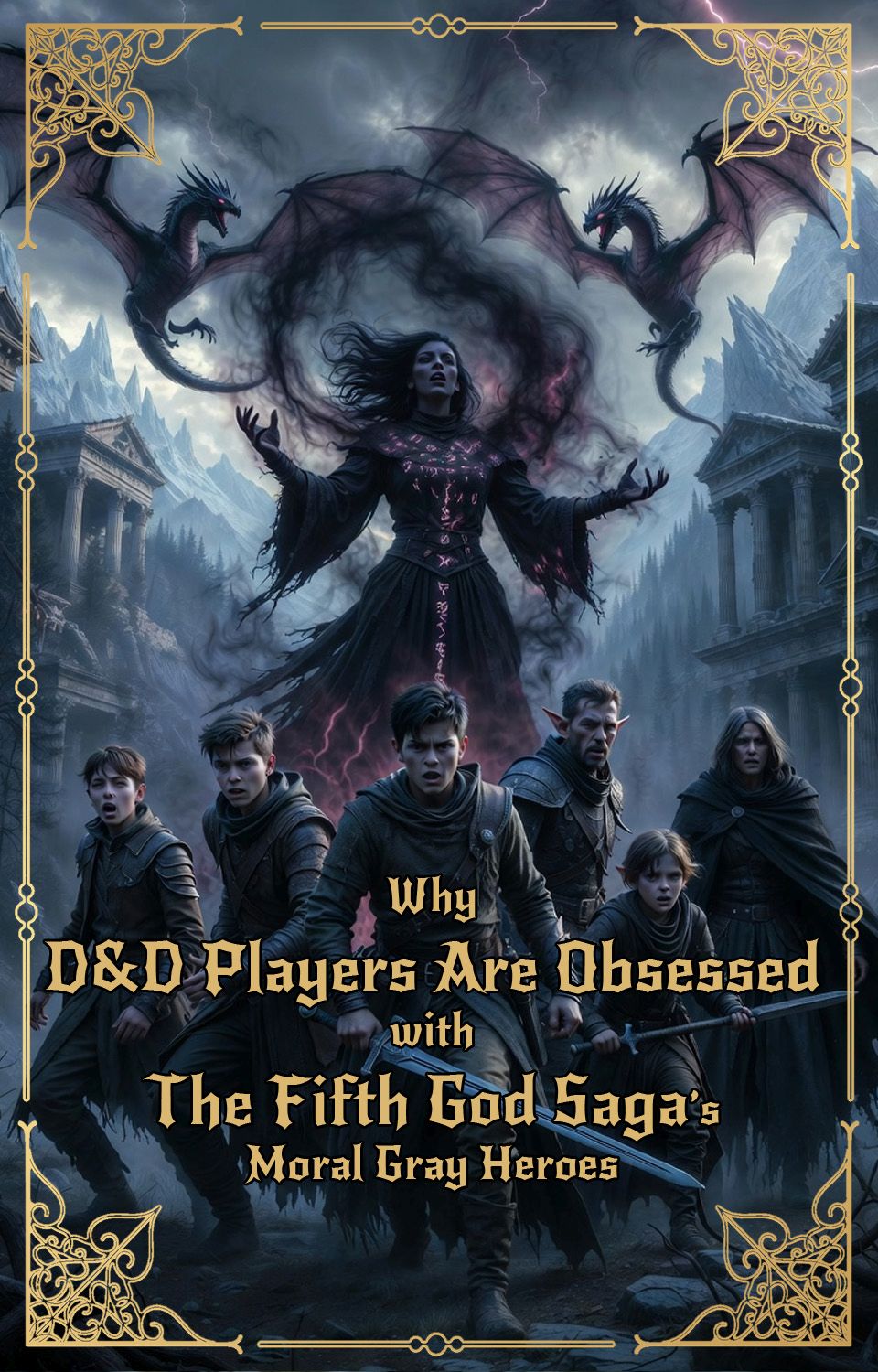
Dungeons and Dragons players thrive on complexity at the table. In a good D&D campaign, no one is purely heroic or irredeemably evil, characters make tough calls that blur lines, alliances shift, and “good” intentions lead to bloodshed. The same gritty, morally ambiguous storytelling that makes tabletop sessions unforgettable is exactly why TTRPG fans are drawn to The Fifth God Saga. This Slavic epic fantasy series, born from the author’s deep roots in Dungeons and Dragons and other roleplaying games, delivers heroes and villains who feel ripped from a long-running homebrew campaign: flawed, conflicted, and never fully in the right.
At the heart of the obsession is the saga’s refusal to hand out easy moral victories. In fantasy inspired by Dungeons and Dragons, players expect worlds where actions have consequences, and The Fifth God Saga delivers that in spades. Set in the richly detailed world of L’ven, a place of feudal kingdoms, ancient gods, black dragons, and Slavic mythological horrors, the story follows four street-hardened orphans thrust into an apocalyptic war. Their journey isn’t about destined glory; it’s about surviving choices that cost lives, souls, and sanity.

Take Janosh, the saga’s central protagonist among the orphans. He’s no classic chosen one. Raised on brutal streets, he’s pragmatic, straightforward, and believes almost anything can be negotiated. Prophecies swirl around him, artifacts like mysterious Keys, cryptic visions, hints from the Eternal Dream, and allies see destiny written on him. But Janosh rejects it outright. He doesn’t want the burden; he wants solutions that don’t involve endless bloodshed. This subversion hits home for D&D players who’ve rolled up reluctant heroes only to watch the table push them toward prophecy anyway. Janosh’s exhaustion from political maneuvering, his moral questioning of every decision that might cause deaths, mirrors the real debates at a D&D campaign table: Is the greater good worth the collateral? His grayness isn’t performative, it’s born from hardship, making every compromise feel earned and painful.
Then there’s Silvio, the young sorcerer of the group. He wrestles with inner darkness while mastering powers he once only dreamed of. In a world where sorcery demands blood, archaic formulas, precise gestures, and rare components, Silvio’s journey is one of constant internal conflict. Does harnessing forbidden strength make him a monster? His battles, on blood-soaked fields, in druidic duels, through shadowed forests, force him to confront how far he’s willing to go. TTRPG fans recognize this instantly: the warlock who flirts with patron corruption, the wizard whose ambition risks the party. Silvio’s arc captures that tabletop tension where power tempts and morality frays, turning him into a hero readers root for even as they worry he’ll cross irredeemable lines.
The orphans as a whole embody unbreakable friendship amid moral chaos. Forged in orphanhood and shared trauma, their bond is the saga’s emotional core, yet it doesn’t make them infallible. They question every kill, doubt their ethics, and face choices where saving the world might require becoming what they fight against. In Book 1, Black Dragons, they rise against Hagala’s return and her unleashed black dragons, racing across Kardiga’s chaos to stop annihilation. By Magic of the Soul (Book 2), relationships deepen amid empire-building threats, forcing harder compromises. This found-family dynamic, laced with doubt and consequence, echoes the best D&D campaigns where party loyalty is tested by gray decisions.
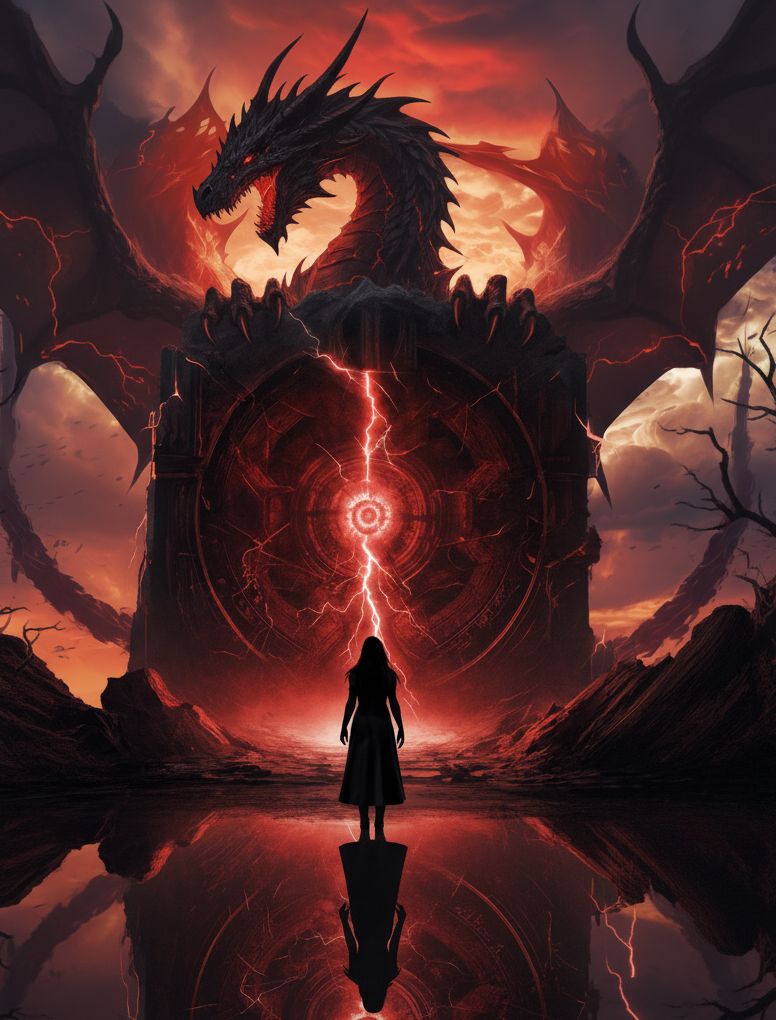
No discussion of moral grayness is complete without Hagala, the ancient sorceress antagonist. Exiled for a thousand years after betrayal and unrequited love, she returns not seeking redemption but total destruction. She unleashes black dragons and dark magic to find the Key and awaken the Fifth God of Chaos, willing to burn L’ven to ashes. Yet her vengeance feels tragically human, scorned, wronged, convinced the world deserves her wrath. Dungeons and Dragons players love nuanced villains like this: the BBEG with legitimate grievances, whose backstory makes players hesitate before striking the final blow. Hagala isn’t cartoon evil; she’s a mirror to what unchecked pain can become, forcing readers (and potential TTRPG adaptations) to ask: Was her exile just? Does stopping her perpetuate injustice?
This moral layering extends to the world itself. L’ven’s gods, Albin (goodness and healing faith), Fera (nature’s balance), Torvus (demonic pacts and cannibalistic rituals), Dubia (inherent magic), aren’t distant overseers; they treat mortals as pieces in a cosmic game. Priests wield faith-based power but navigate church politics; witches gain strength through taboo rites but risk possession; druids enforce harmony but face consequences for imbalance. No path is clean. Fantasy inspired by Dungeons and Dragons often features divine patrons with strings attached, and here those strings tangle into ethical knots.
Races and creatures add texture to the grayness: elves (forest, blue, dark variants), dwarves, gnomes, lizardfolk varani, big-cat hos’sanani with meritocratic roots, plus Slavic beasts like drekavac, moguts, giants, treants, and wyverns. Alliances between kingdoms, caliphates, and tribes create political intrigue where “right” sides don’t exist, only survival. D&D players adore settings like this, where domain play, faction wars, and moral dilemmas drive sessions.
The saga’s structure amplifies the obsession. Parallel plotlines, multi-continent quests, trembling Gates, and prophecies that mislead or drive madness create the sprawling feel of a year-long D&D campaign. Book 3, The Gate (in progress), promises to tie arcs together while leaving L’ven open for more, much like how tabletop worlds evolve beyond one story.
Ultimately, D&D players obsess over The Fifth God Saga because it captures what makes their hobby magical: characters who grow through flawed choices, worlds where heroism is messy, and stories that linger long after the session ends. No hand-holding, no clear good vs. evil, just people (and gods) rolling with consequences.
If you’re a TTRPG fan craving novels that read like your darkest, most compelling Dungeons and Dragons campaign, start with The Fifth God: Black Dragons and continue to Magic of the Soul. Free samples and the full saga await at daliborkovacec.com/the-fifth-god-saga/. Dive into L’ven, where heroes question if they’re becoming the monsters, and every choice costs something irreplaceable.
Trebate biti prijavljeni kako bi objavili komentar.