
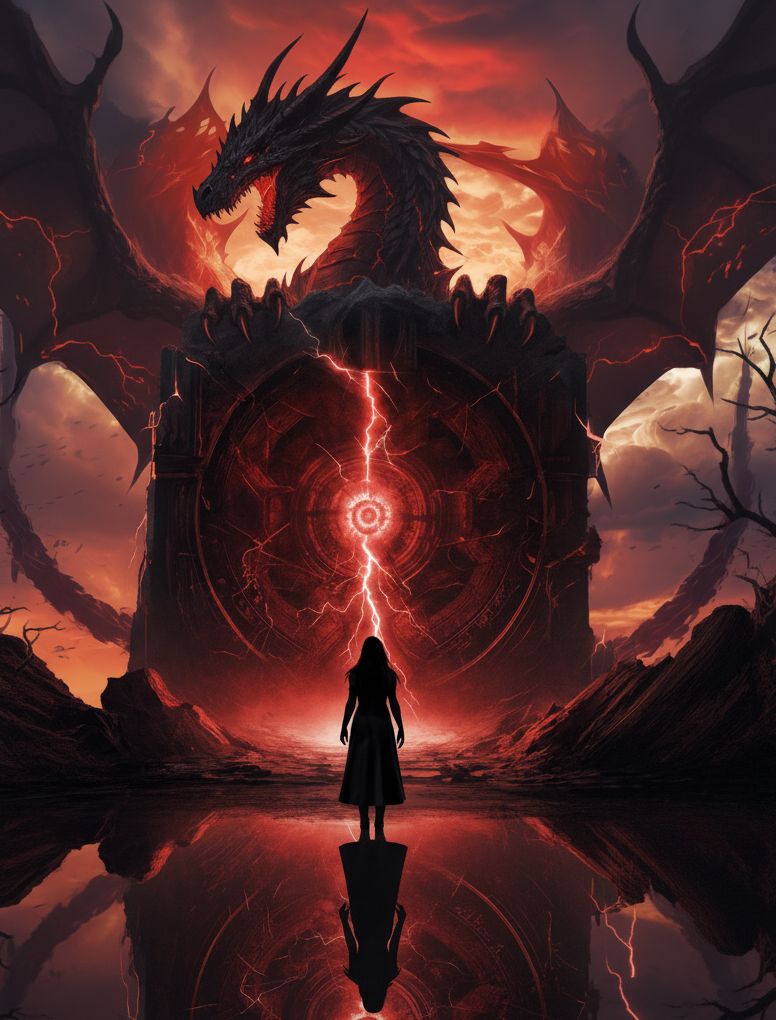
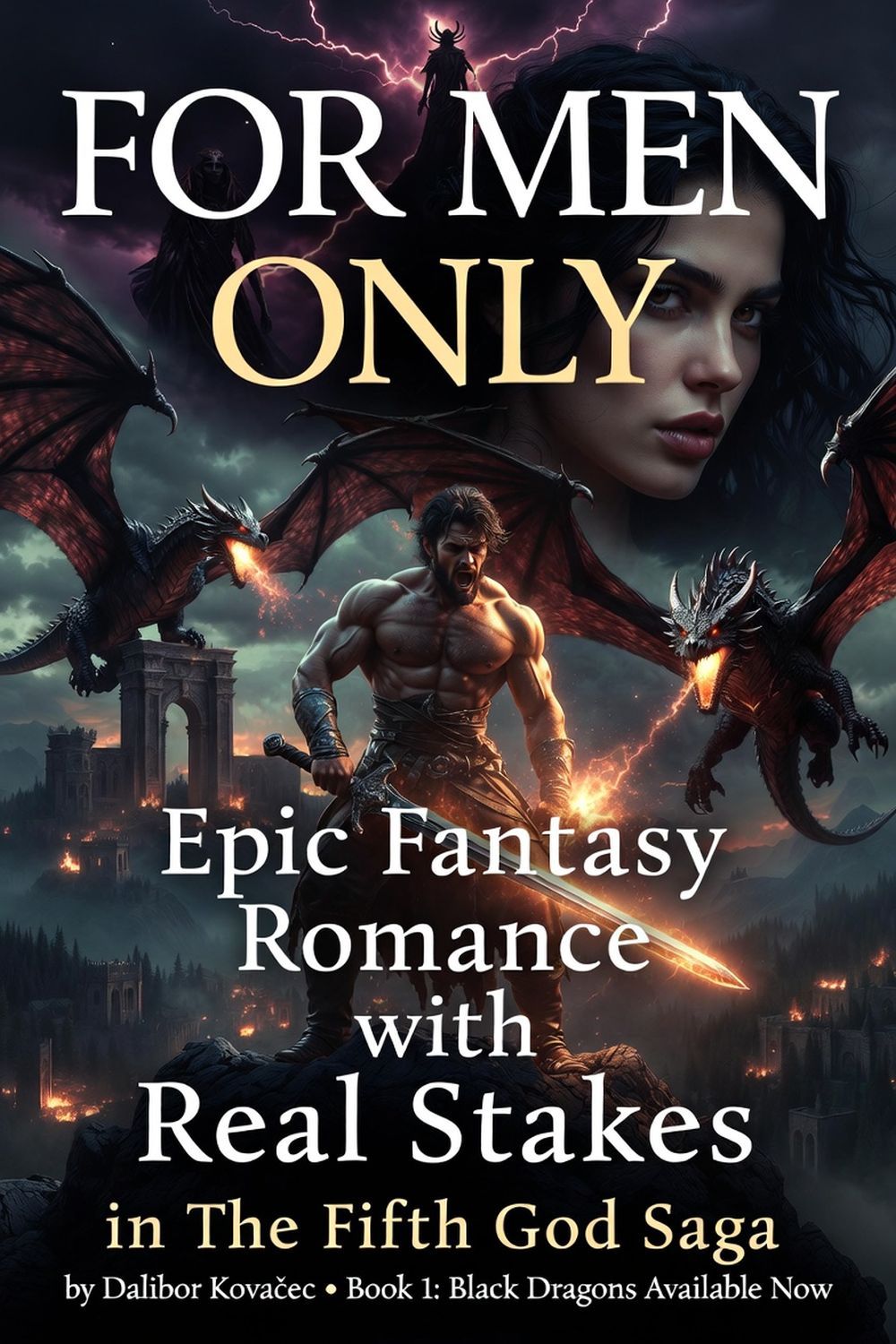
I’m a man, and when I reach for epic fantasy, I’m not looking for a comfort blanket. I want scope and struggle, blood and steel, brotherhood and betrayal. But here’s what the genre often gets wrong: it treats romance as something separate from the real business of war and politics, as if desire doesn’t shape kingdoms and love doesn’t move armies. When I set out to write The Fifth God saga, starting with Black Dragons, continuing through Magic of the Soul, and culminating in The Gate, I wanted to prove that fantasy romance for men could carry the same weight as any battle scene.

My series follows a powerful sorceress who returns to a world that exiled her centuries ago. She comes back stronger, accompanied by ancient powers, and driven by something far more dangerous than simple revenge: unrequited love twisted by centuries of isolation. This isn’t a villain origin story you’ve seen before. It’s an exploration of what happens when the capacity for deep feeling becomes weaponized, when the same passion that could have built a life instead threatens to unmake a world.
The four protagonists who stand against her don’t volunteer for heroism. They’re caught by fate or chance, stumbling into a conflict that predates their births. And here’s where the romance becomes essential rather than decorative: each of these men carries his own wounds regarding love and loyalty. One dreams of marriage while noble families conspire to destroy his happiness. Another discovers connection across enemy lines, finding that the person he should hate becomes the one he understands most completely. These aren’t subplots to pause the action; they’re the engine that drives every sword stroke.
I grew up on fairy tales and mythology, but as I matured, I noticed how often male characters in epic fantasy were emotionally constipated. They could slaughter armies but couldn’t articulate grief. They’d die for their brothers but never examine why. When I created the soul-based magic system for this series, I made sure that emotional state directly affected magical capability. Power comes from the soul, and the soul is vulnerable to love, to loss, to the entire spectrum of human connection. A warrior who cannot access his own heart finds his magic failing when he needs it most.
Black Dragons introduces this world through the lens of impending catastrophe. Emperor Uto’s forces gather, ancient evils stir, and dragons, those magnificent, terrible creatures, return not as mere monsters but as manifestations of suppressed desire and unacknowledged power. The romantic relationships here develop under the pressure of extinction. When two characters fall for each other while preparing for siege, every stolen moment costs something. Every glance exchanged across a war council carries risk. This is fantasy romance with teeth.
By Magic of the Soul, the stakes escalate from personal survival to cosmic consequence. The sorceress’s vendetta reveals deeper layers, and the protagonists discover that their emotional bonds aren’t weaknesses to overcome but strengths to harness. Soul magic requires vulnerability; the most powerful spells demand that the caster expose their deepest selves. I’ve watched male readers hesitate at these chapters, expecting sentimentality, then realize that the emotional intensity matches the combat scenes blow for blow. Opening yourself to another person requires courage that parallels any battlefield charge.
The Gate, the third installment, brings these threads to a crisis point. The barrier between worlds thins, and the Fifth God threatens to enter reality through, quite literally, the gates opened by human passion and pain. The romance here becomes existential: not just whether lovers will unite, but whether love itself can serve as a bulwark against divine indifference. My characters face the choice that defines mature masculinity: whether to remain isolated and “safe,” or to risk connection knowing it brings vulnerability.
I write from Croatia, drawing on Slavic mythology that predates the standardized fantasy tropes of Western medievalism. Veles, the chaos god, and Perun, the thunder deity, don’t appear by name but their essences permeate the magic, forces of destruction and order that mirror the turmoil within human relationships. The forest magic in my books is beautiful but never safe, much like the romantic bonds my characters form. This cultural specificity gives the series weight; these aren’t generic settings but lived mythologies that inform how characters view honor, sacrifice, and attachment.
The feedback I’ve received confirms what I suspected: men are hungry for this combination. They want the griffon-riding soldiers and the tournament knights, the political intrigue and the sorcerous duels. But they also want to see male characters who desire deeply, who struggle with the responsibilities of emotional leadership, who understand that winning the war means nothing if you lose the person you fought for. The romance in The Fifth God isn’t an escape from the grimdark reality, it’s the reason the darkness matters.
Available through Amazon, Kobo, and directly from my website, this series rewards readers who bring their full selves to the text. These are dense books, immersive experiences that assume you’re intelligent enough to track multiple motivations and mature enough to value emotional complexity. The combat is visceral, the magic system rigorous, and the romance, when it arrives, hits with the force of revelation rather than convenience.
I didn’t write these books to comfort. I wrote them to challenge the notion that men must choose between being warriors and being lovers. In The Fifth God saga, you become both, or you become nothing at all. The dragons are waiting, the sorceress is watching, and the gate is opening. The only question is whether you’ll have someone worth fighting beside when the ancient powers arrive.
Trebate biti prijavljeni kako bi objavili komentar.