
If you’ve ever run a Dungeons and Dragons game that stretched across months or years, you know the thrill of an epic, multi-session quest arc: layered plotlines, escalating stakes, character growth through tough choices, and a world that feels alive beyond the table. The Fifth God Saga captures exactly that feeling in novel form, born from the author’s decades of Dungeons and Dragons and GURPS play, it’s a Slavic-inspired epic fantasy that reads like a homebrew D&D campaign turned into gripping prose. While not LitRPG, the series delivers the structure, depth, and payoff that make long-term TTRPG stories unforgettable.
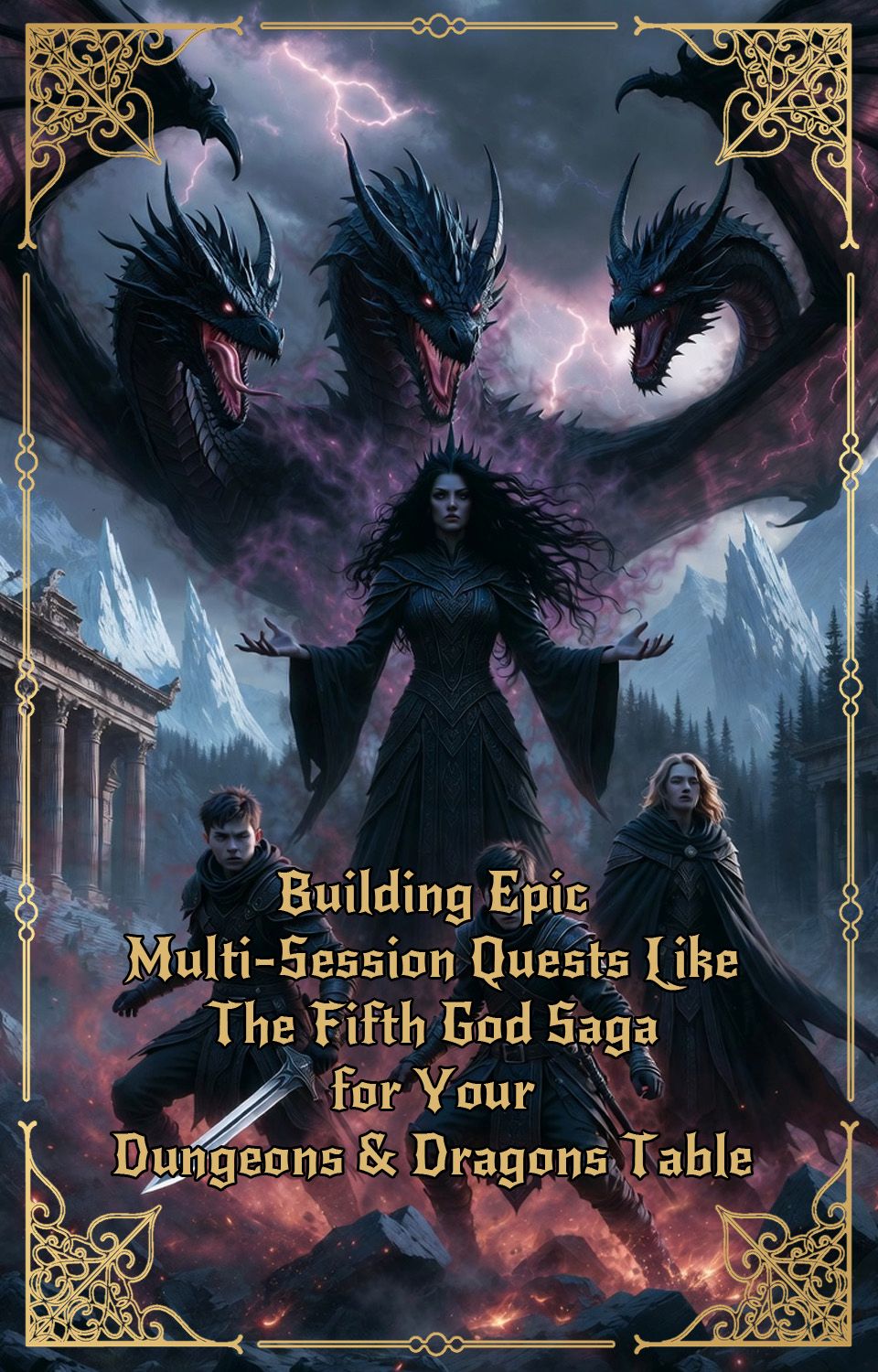
Set in the vast world of L’ven, a pre-industrial realm of feudal kingdoms, diverse races, Slavic mythological creatures, and gods who play with mortals like dice on a cosmic table, the saga follows four street-hardened orphans thrust into a world-ending conflict. Ancient sorceress Hagala, exiled for a thousand years over betrayal and unrequited love, returns with black dragons and dark magic to locate an ancient Key, open the Gate, and awaken the chaotic Fifth God. Her revenge threatens to burn everything; the orphans, led by pragmatic negotiator Janosh (who rejects his “chosen one” destiny) and young sorcerer Silvio (battling inner darkness), must stop her amid moral gray choices, unbreakable friendships, and blood-paid power.

Here’s how Dungeon Masters can adapt The Fifth God Saga’s multi-session quest blueprint to build epic D&D campaigns that span levels, sessions, and even real-world years.
- Start with a Personal, Relatable Hook (Session 1–3: Low-Level Origins)
Great long campaigns begin small and personal. In Black Dragons (Book 1), the story kicks off with four orphans from brutal streets and battlefields, survivors, not destined heroes. Their early struggles build bonds before the apocalypse hits.
D&D Campaign Application: Launch your party as low-level (levels 1–3) commoners or street urchins in a chaotic city like Kardiga’s capital. Early sessions focus on survival: heists for food, dodging guards, forging alliances in orphanages or taverns. Introduce subtle foreshadowing, cryptic dreams (the Eternal Dream that drives nations mad if ignored), ancient artifacts one PC carries unknowingly, or rumors of black dragons stirring. This “found family” origin creates emotional investment that carries through dozens of sessions, just like the orphans’ unbreakable friendship drives the saga.
- Layer in Rising Threats and Parallel Plotlines (Mid-Campaign Escalation)
The saga uses multiple interwoven threads: Hagala’s revenge quest, the orphans’ reluctant rise, empire-building under figures like Emperor Uto (with griffon riders, undead, and black dragons), political intrigue in feudal Kardiga and Dragonia county, and divine games among Albin (goodness/healing), Fera (nature), Torvus (demons/cannibalism), and Dubia (pure magic).
TTRPG Structure Tip: Design your campaign with 3–5 parallel arcs that converge. One thread follows a rising villain (Hagala analog: a scorned NPC gathering power). Another tracks party investigations (prophecies, Keys, Gates). Add side threads: church politics (Albin clerics wielding influence), druidic grove conflicts (Fera balance disrupted), or demonic pacts (Torvus witches tempting PCs). Use downtime between sessions for world events, armies march, dragons ravage villages, making the world feel reactive. This mirrors how fantasy inspired by Dungeons & Dragons thrives on interconnected stakes.
- Incorporate Costly, Consequential Magic (Resource & Moral Management)
Magic in L’ven isn’t free: sorcery requires archaic formulas, gestures, and components (blood, sulfur, diamond dust, crow ash); overuse risks madness or tolls. Witchcraft demands taboo rituals; priestly spells need strong faith; druidic power enforces natural balance.
Dungeons and Dragons Inspiration: Homebrew component tracking and costs. Wizards prep spells with real scarcity (scavenge ingredients mid-quest). Add backlash: blood magic inflicts exhaustion or curses; failed pacts summon demons. Tie magic to morality, Torvus rites tempt with power but erode alignment. This forces the strategic depth of classic D&D campaign spellcasting while adding narrative weight, like Silvio’s struggle with darkness.
- Subvert Tropes for Player Agency (Chosen One Rejection & Gray Choices)
Janosh embodies the reluctant hero: prophecies swirl, artifacts point to him, but he negotiates instead of embracing fate, exhausting allies with politics. Heroes question every kill; stopping Hagala might perpetuate injustice.
Campaign Hook: Plant a “chosen one” prophecy on one PC, but let them reject it. Build sessions around debates: ally with a gray NPC? Sacrifice innocents? Use fallout mechanics (haunting guilt, lost allies, curses). Encourage roleplay where choices shape the world, no railroading. This captures TTRPG magic: players feel their decisions matter, echoing the saga’s moral ambiguity.
- Build Epic Scope with Travel, Factions & Boss Layers (Exploration & Climaxes)
L’ven spans continents: Mediterranean coasts in Kardiga/Dragonia, deserts, icy mountains, swamps. Races (elves variants, dwarves, gnomes, lizardfolk varani, big-cat hos’sanani) and creatures (drekavac, moguts, giants like Stribor, treants, black dragons) create diverse encounters. Armies gather; Gates tremble.
Multi-Session Design: Use hex/point-crawl for travel: sea voyages with mermaids, mountain giant lairs, forest drekavac hunts. Introduce faction play, broker alliances between kingdoms, churches, tribes. Escalate bosses: mid-tier dragon cultists, then black dragon lieutenants, climax with Hagala-like confrontation at the Gate. In Magic of the Soul (Book 2), threats grow (undead armies, empire forging); The Gate (Book 3, coming) resolves arcs while opening more. Structure your campaign similarly: act breaks every 8–12 sessions, with rising level tiers (1–5 origins, 6–10 investigations, 11+ apocalyptic war).
- Endgame: Cosmic Stakes & Open-Ended Legacy
Gods treat mortals as pawns; awakening the Fifth God risks chaos. The trilogy resolves core conflicts but L’ven’s vastness hints at continuation.
D&D Campaign Payoff: Build to a multi-session finale: assault on the Gate, divine confrontations, player choices deciding fate (seal the Gate? Bargain with gods?). Leave hooks for sequels, new threats in unmapped Vetus continent. Reward growth: orphans become legends; your PCs earn titles, domains, or legacies.
Running a campaign like The Fifth God Saga means embracing slow-burn character focus, political depth, and high-stakes revenge, perfect for mature groups craving more than dungeon crawls. It proves fantasy inspired by Dungeons and Dragons shines when rooted in tabletop DNA: costly magic, flawed heroes, reactive worlds.
Want to experience the saga that inspired these ideas? Start with The Fifth God: Black Dragons, continue to Magic of the Soul, and watch for The Gate. Free samples and books at daliborkovacec.com/the-fifth-god-saga/. Bring L’ven’s epic quests to your table, your players will thank you for sessions they’ll talk about for years.
Trebate biti prijavljeni kako bi objavili komentar.