

I’ve spent over two decades in the trenches of technology and copywriting, raising two daughters who taught me that strength and sensitivity aren’t opposites but partners. When I finally committed to writing the epic fantasy saga I’d been dreaming about since childhood, I knew exactly what I wanted to avoid: the false choice between visceral combat and emotional intimacy. The Fifth God series, beginning with Black Dragons, continuing through Magic of the Soul, and building toward the revelation in The Gate, represents my answer to a genre that too often separates war from love, as if men don’t experience both with equal ferocity.

My protagonist Janosh emerged from a simple observation: most male heroes in fantasy are either emotionally constipated killing machines or reluctant warriors who stumble into relationships despite themselves. I wanted someone different. Janosh grew up an orphan on the streets, which made him resistant to many hardships but also gave him a core belief that everything can be negotiated. He’s straightforward, almost to a fault, and watching him navigate politics, which mentally exhausts him, while discovering that some connections can’t be bargained with became the engine driving the entire saga. When he falls, he falls completely, and that vulnerability makes him dangerous in ways that have nothing to do with his sword arm.
The world of L’ven isn’t a backdrop for romance; it’s a crucible that forges it. I drew from Slavic mythology, treants, water nymphs, vivers, drekavac, and the ancient giants Stribor and Svitogor, because these stories shaped my childhood in Croatia. But I also created something new: a magic system where power comes from the soul, and the soul is vulnerable to connection. In Black Dragons, when Janosh and his companions first encounter the sorceress Hagala, they’re not just facing an ancient evil returning from exile. They’re facing the consequences of unrequited love twisted by centuries into something that threatens to burn the entire world. Love denied becomes weaponized, and that transformation is more terrifying than any dragon.
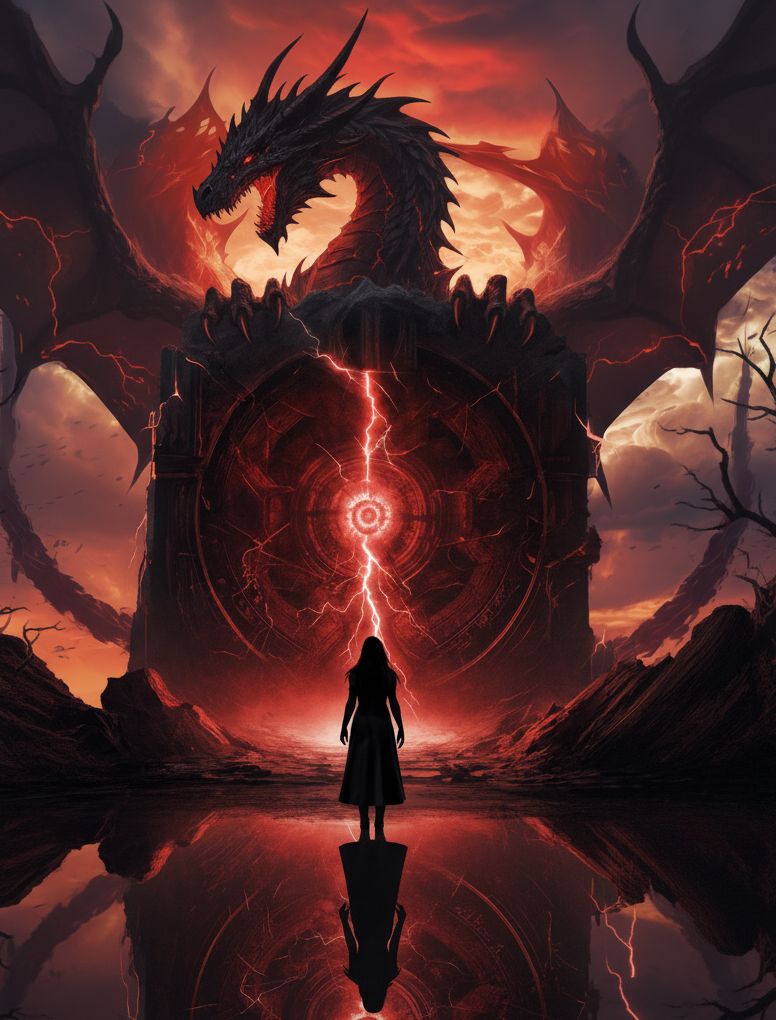
Speaking of dragons, they’re not mere monsters in my books. The black dragons that give the first novel its title represent suppressed desire, the parts of ourselves we exile because they feel too dangerous to acknowledge. When they return, they force characters to confront what they’ve buried. This manifests in the romantic subplots that run through the series, more than one, involving love triangles and fated connections that emerge organically from the pressure of impending catastrophe. Young, powerful individuals attract attention; they also attract complications. The bedroom bonds formed in these pages carry the same stakes as battlefield alliances because in L’ven, emotional betrayal can unravel magical pacts that hold kingdoms together.
Magic of the Soul escalates this integration of passion and power. The soul-based magic system I developed requires practitioners to access their deepest selves, which means the characters who master it must become experts in their own emotional landscapes. I’ve watched male readers hesitate when they hit these chapters, expecting the narrative to soften into sentimentality. Instead, they find the same intensity that drives the combat scenes, strategic, visceral, and consequential. Opening yourself to another person requires courage that parallels any charge into enemy lines, and the magical duels in this book literalize that metaphor. When two lovers share a magical connection, they share pieces of their souls, making every touch a form of combat and every separation a wound that doesn’t close.
I made a deliberate choice to avoid the “enemies to lovers” trope that dominates so much fantasy romance. It doesn’t fit the structure of L’ven or the dynamics of my characters. Instead, I explore fated love and unbreakable friendship, bonds that form not from opposition but from recognition. When Janosh meets the woman who will challenge everything he believes about negotiation and compromise, there’s no antagonism, only the terrifying realization that some things cannot be bargained for, including her safety. The romance that develops isn’t a distraction from the war against Hagala’s vengeance; it’s the reason that war matters. Without something worth protecting, battle becomes mere slaughter.
The political intrigue in The Gate, the third installment where the barriers between worlds thin and the Fifth God threatens to enter reality, reflects this philosophy. Politics in my saga serves as a tool used by powerful individuals who want to rule or save the world, but it often interferes with what characters would choose if left to their own hearts. Some would choose differently if politics allowed it. This tension between public duty and private desire creates the central conflict for my male characters: can they be both warriors and lovers, or must they sacrifice one for the other? The answer the series provides is that attempting to split these aspects of masculinity leads to the kind of fragmentation that creates villains like Hagala, people who loved deeply, lost completely, and chose revenge over reconciliation.
I write for adult readers, specifically those drawn to “new adult fantasy” who can handle violence without glorifying it and intimacy without trivializing it. The battle scenes between powerful individuals and large armies are present because epic fantasy demands them, but I never wanted the story to become fully dark fantasy. The darkness serves the light, or at least the possibility of light. When characters question their morality after decisions lead to death, and they do, repeatedly, they’re engaging with the true cost of power. The same applies to romantic choices. Every bond formed closes off other possibilities. Every alliance made creates new vulnerabilities.
Available across platforms from Amazon to Kobo, Lulu to Waterstones, these books reward readers who bring their full selves to the text. I’ve been told they’re dense, immersive experiences that assume intelligence and emotional maturity. Good. I didn’t write them to comfort; I wrote them to challenge the notion that men must choose between being effective and being connected. In The Fifth God saga, the protagonists discover that their greatest strength lies not in their ability to destroy, though they can, and do, but in their capacity to love despite knowing the cost.
The dragons are returning. The sorceress is watching. The gate is opening. The only question is whether you’ll have someone standing beside you when the ancient powers arrive, and whether you’re brave enough to admit that you need them there.
Trebate biti prijavljeni kako bi objavili komentar.