

There is a particular alchemy that happens when epic fantasy dares to draw from the deep wells of Slavic folklore rather than recycling the same Anglo-Saxon tropes until they lose all flavor. I grew up on stories of vile, those fierce mountain spirits who could grant warriors strength or strike them dead with a glance, and drekavac, the spectral creatures whose cries heralded doom. When I set out to create the world of L’ven for The Fifth God saga, I refused to settle for generic elves and orcs. I wanted the ancient giants Stribor and Klek to stride across my pages. I wanted water nymphs and will-o’-the-wisps that felt like they had stepped out of a grandmother’s warning rather than a roleplaying manual. And I wanted all of it to serve a story where the battles were brutal, the myths were alive, and the romance hit with the force of a warhammer.

The foundation of fantasy romance for men rests on authenticity, and nothing feels more authentic than mythology that carries the weight of centuries. In The Fifth God: Black Dragons, readers enter a world where the Church of Albin preaches goodness and light, but the forests still whisper with the old ways. Druids follow Fera, the goddess of nature, maintaining balance while witches who serve the underworld god Torvus perform rituals that would make a sane person look away. This is not sanitized fantasy. When my characters encounter creatures from Slavic legend, the treants that walk like living wood, the silver fairies that flicker at the edge of vision, the moguts and Markulesa that haunt the wild places, they are encountering beings that demand respect because they predate human civilization and will outlast it.
What separates compelling epic fantasy from forgettable fluff is how thoroughly the world has been imagined. In The Fifth God: Magic of the Soul, the second book in the series, I pushed deeper into the mythology that underpins L’ven. The hos’sanani, hybrids of human and great cat, created not by the gods but by experimental magic, bring a different texture to the narrative than standard fantasy races. They spent their entire history in slavery and developed a culture blending democracy and meritocracy, a sharp contrast to the feudal kingdoms of Kardiga and Rohamara. When these characters fall in love, they do so with the full weight of that history pressing on them. The romance in these books is not an escape from the world’s brutality; it is an act of defiance against it.
The magic system in The Fifth God saga draws directly from the Slavic understanding that power always demands its pound of flesh. Sorcery, derived from the neutral goddess Dubia, requires mathematical precision, archaic languages, and material components, knowledge as sacrifice. Witchcraft channels demons from the underworld Črt, and the rituals often cost more than the practitioner bargained for. Druidic magic demands devotion to Fera and the natural balance. When characters in my books wield power, they are engaging with forces that do not care about their convenience. This mirrors how relationships unfold in L’ven: passion is not safe, desire is not convenient, and love that grows in the shadow of apocalypse carries a price tag.
The ancient giants of Slavic mythology, Koleda, Kornat, Leđan, Ognjan, Orjen, Regoč, Snježana, Snježnik, Svitogor, Troglav, Magleni, are not mere background decoration in The Fifth God books. They represent the scale of what has been forgotten and what threatens to return. When Hagala, the ancient sorceress exiled for a thousand years, unleashes her black dragons and seeks to summon the Fifth God, she is tapping into powers that the world has tried to bury. Her motivation is rooted in the most human of experiences, unrequited love that curdled into obsession, and that emotional core makes her apocalyptic agenda feel personal rather than abstract. This is what fantasy romance for men should deliver: stakes that matter because they are driven by recognizable human hunger, even when expressed through mythic scale.
I have always believed that the best epic fantasy operates on multiple frequencies simultaneously. When you open The Fifth God books, you encounter griffon riders darkening the skies, undead warriors rising from ancient battlefields, and dragons whose scales flash like molten lava. But you also encounter Janosh the Mountain, the street-raised orphan who never asked to be anyone’s chosen one, navigating courtly intrigue while the king’s daughter sets her eyes on him and a mysterious queen from distant shores arrives with both opportunity and catastrophe. These romantic threads are not distractions from the action; they are the reason the action hurts. When characters have something to lose beyond their own lives, every battle becomes more than spectacle, it becomes testimony.
The Slavic aesthetic that permeates L’ven shapes how intimacy unfolds in these stories. This is not the courtly love of Arthurian legend, with its rules and its purity. The vivers and dryads that populate these lands understand desire as elemental, sometimes literally so. When characters come together in The Fifth God saga, they do so knowing that the world may end before morning. The physical intimacy in these books is earned, consequential, and exists on the same spectrum as the violence, both require vulnerability, both carry risk, both can leave you broken. These are new adult fantasy novels intended for readers who have outgrown the simplicity of stories where love conquers all without cost.
What readers consistently tell me about The Fifth God saga is that the Slavic mythology caught them off guard in the best way possible. They came expecting standard fantasy fare and found instead a world where the creatures feel like they have legends attached to them, where the gods have personalities and agendas, where the ancient giants might wake at any moment. They speak of Janosh’s skepticism about his own legend, of the impossible choices between love and loyalty, of the way power and sacrifice intertwine in relationships forged under fire. These are readers who wanted their epic fantasy to acknowledge the full spectrum of human experience, including the hunger for connection that persists even when griffon riders are circling overhead.
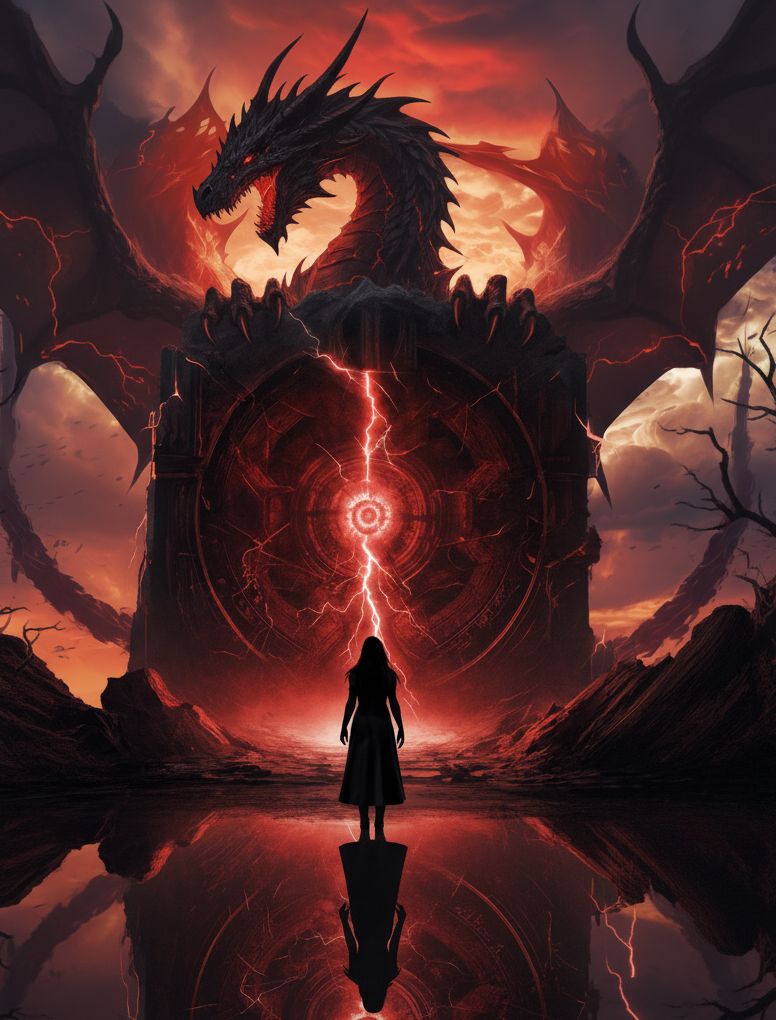
As I continue working on The Gate, the third book in The Fifth God series, I am pushing these Slavic elements even further. The romantic subplots that began in Black Dragons and deepened in Magic of the Soul are reaching their crescendos against a backdrop of mythic forces reawakening. The Gate itself, an enigmatic structure tied to the ancient mechanisms that could unleash the Fifth God, looms over every relationship in these pages. Characters who have danced around their feelings must finally choose, and those choices will echo through throne rooms and battlefields with equal force. The ancient mythology of L’ven is not just setting; it is active participant, shaping destinies as surely as any sword.
For readers who have grown tired of fantasy that treats mythology as wallpaper and romance as an afterthought, The Fifth God saga offers something different. These are books where the Slavic-inspired creatures and gods feel like they have weight and history. Where falling in love is as transformative as discovering you can shape reality. Where the brutal myths and the brutal battles serve the same purpose: to remind us what matters when everything is at stake. This is epic fantasy in Slavic style, where the old stories still have teeth, where the romance packs a punch, and where the Fifth God’s arrival threatens not just kingdoms, but the very idea that love can survive the end of the world.
Trebate biti prijavljeni kako bi objavili komentar.