
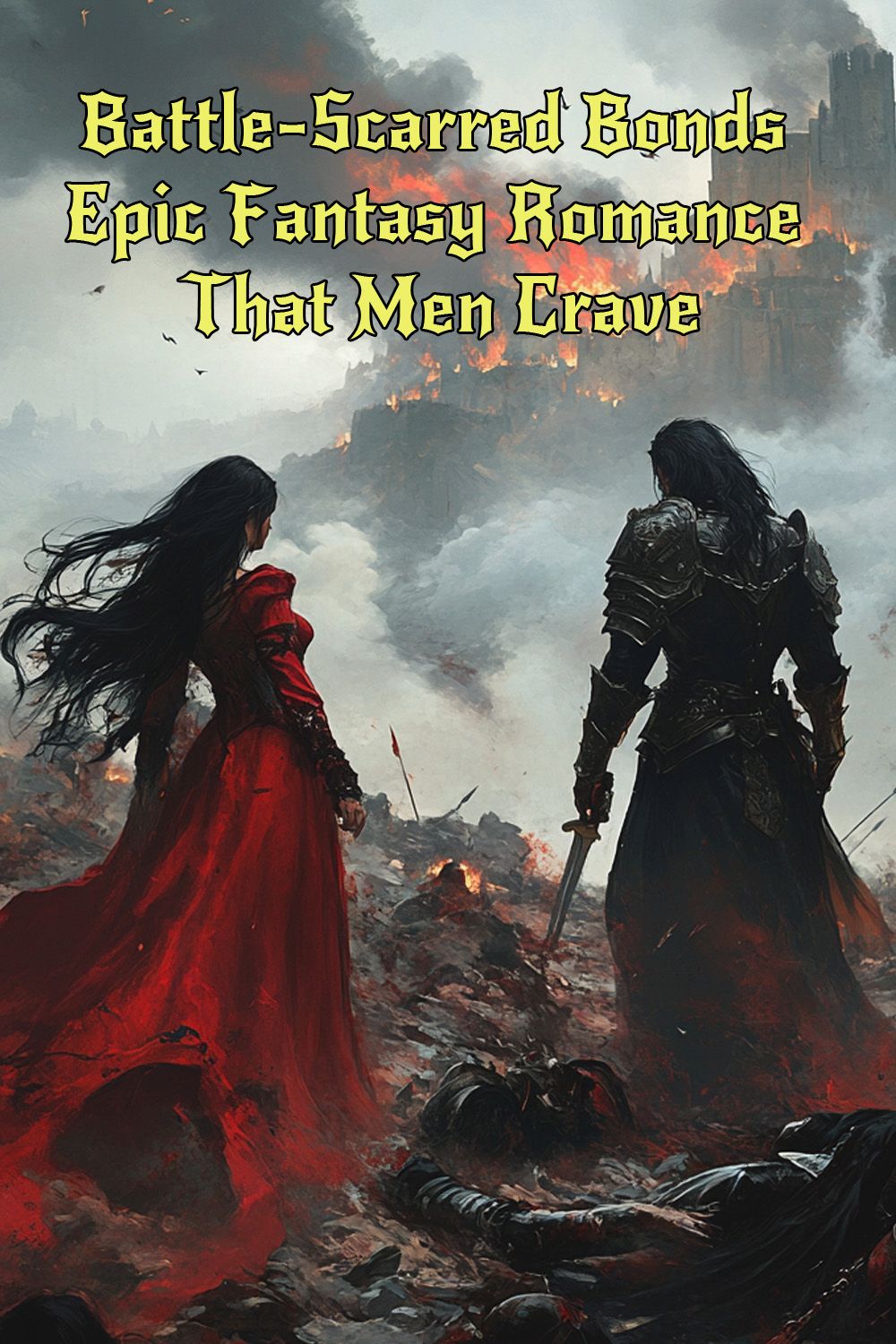
Every scar has a story, and the best ones involve someone worth bleeding for. That is not a metaphor I arrived at lightly. When I set out to write The Fifth God: Black Dragons, the opening book in my Slavic epic fantasy saga, I made a deliberate choice that I would not separate the violence from the tenderness, the battlefield from the bedchamber of the heart. The world of L’ven, where the saga unfolds, is a place of dragon attacks and sorcerer duels and armies of the undead. But it is also a place where people fall in love, make catastrophically bad decisions because of it, and carry those choices like wounds that never fully close. That intersection, the battle-scarred bond between warriors and the people they love, is exactly where the most potent fantasy romance for men lives.

The War Is the Relationship
There is a temptation in storytelling to treat epic conflict and personal romance as separate tracks that occasionally cross. Tidy. Manageable. Wrong. In Magic of the Soul, the second book of The Fifth God saga, I deliberately collapsed that separation. Emperor Uto’s forces, griffon riders, undead warriors, and the terrifying black dragons that Hagala has unleashed upon the continent, are not just a plot mechanism. They are the pressure that tests every bond in the story. Two lovers who dream of a quiet life and a marriage find that dream is not a refuge from the war. The war is their relationship now. Every moment they steal together is defined by what surrounds it. That dynamic, love as an act of resistance, not escape, is the heartbeat of fantasy romance for men at its most honest.
When I talk to readers, particularly younger men who have come to the genre, this is the element they respond to most viscerally. Not the magic system, not the dragon lore (though both are deeply built out in The Fifth God saga, with four distinct types of magic and a richly layered Slavic mythological bestiary). What lands is the feeling that the emotional stakes and the physical stakes are the same stakes. You cannot save the world without also deciding what, and who, you are saving it for.
Brotherhood as the Foundation of Everything
Before any love story begins in The Fifth God saga, there is friendship. The four central protagonists, bound by shared orphanhood and years on the streets, carry a loyalty to each other that precedes and, in many ways, outlasts any romantic entanglement the narrative brings them. This is something I feel strongly about as a writer: fantasy romance for men is not only about erotic or romantic tension between two people. It is often first about the bonds between men, the kind that form in adversity and calcify into something that does not require language to sustain itself.
Janosh, the saga’s primary protagonist, is defined almost as much by his friendships as by his love life. His straightforward, unglamorous decency, forged on the streets, not in some noble hall, is what his companions trust, even when they cannot trust the gods or the prophecies or the politicians. That bedrock matters enormously to the romantic subplots that grow around and through it. A man who has demonstrated loyalty at great cost to his friends carries a different weight when he turns that loyalty toward someone he loves. The reader already knows the currency is real.
The Woman Who Burned the World for Love
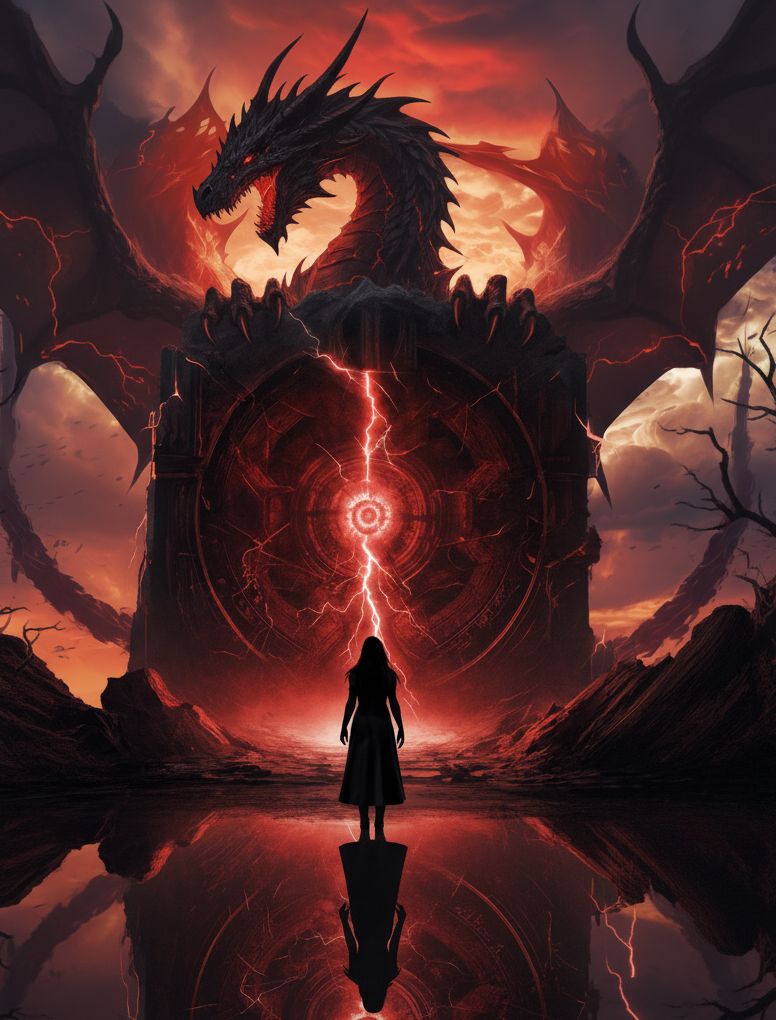
The central antagonist of The Fifth God saga is not a warlord or a dark god. She is Hagala, sorceress, exile, and the most devastating argument I know for why unrequited love belongs at the center of fantasy romance for men. Hagala spent a thousand years in exile following a betrayal she could not forgive. When she returns in Black Dragons, she brings majestic black dragons, a dark artifact capable of summoning a god of destruction, and a grief so old it has become architecture. Her entire apocalyptic campaign, the goal of opening the Gate for the arrival of the Fifth God, is fueled not by ambition or ideology but by the scorched remains of something she once felt for someone who did not feel it back.
I want to be precise about why this matters in the context of fantasy romance. Hagala is not a villain who uses love as a disguise. She is a villain made by love’s failure. The world of L’ven is facing extinction because of an emotional wound that was never healed. That is not a small claim about the importance of human feeling. It is the largest possible claim. And it asks the reader, particularly the male reader navigating his own experience of desire and rejection and pride, to sit with a genuinely uncomfortable question: what are you willing to let burn?
Love Triangles Built on Stone, Not Soap
The Fifth God saga contains multiple love triangles, and I am not embarrassed by that. I am, however, insistent on what distinguishes them from the contrived, drama-for-drama’s-sake triangles that can make the trope feel cheap. In L’ven, romantic rivalry is almost always structural. Noble families conspire against young couples not because they are cruel for cruelty’s sake but because in a feudal world, marriage is an instrument of political power. Love triangles in this saga are triangles of force, love pulling in one direction, dynasty and duty pulling in another, and the third point occupied by whoever benefits from the split.
This gives fantasy romance for men exactly the kind of moral texture it needs to feel worth investing in. When a character chooses love over a politically advantageous match, something real is sacrificed. A reader can feel the cost in the story’s architecture, not just in the characters’ emotional declarations. The passion is validated not by words but by consequence. That is the kind of romance that earns its place in an epic fantasy.
The Wizard, the Dark Magic, and the Longing He Cannot Afford
One of my favorite threads in Magic of the Soul follows a young wizard struggling with forbidden dark magic that threatens to hollow him out from the inside. His arc is classic fantasy, mentor, hidden power, ancient returning peoples, but what gives it emotional resonance is the person he cannot stop thinking about while all of this is happening. He is not stable enough to love well. He knows this. The magic pulling at him is not metaphorically dark; it is genuinely dangerous, capable of consuming his identity. And yet.
This is the texture of fantasy romance for men that I find most truthful: the man who is not yet the person he needs to be, who loves anyway, who lets that love become either his salvation or his accelerant. In the world of L’ven, there is no guarantee it will be the former. The saga does not promise happy endings by default. It promises honest ones, outcomes earned by who the characters were willing to become, or refused to become, when it counted.
Slavic Mythology and the Emotional Grammar of the Fantastic
Part of what makes The Fifth God saga feel different from the fantasy many readers have already consumed is the mythological source material. L’ven is populated with creatures from Slavic folklore, drekavac, moguts, water nymphs, silver fairies, treants, will-of-the-wisps, alongside dragons, wyverns, and griffins, and the ancient Slavic giants whose names carry the weight of old oral tradition: Svitogor, Koleda, Regoč, Snježnik. This is not an aesthetic choice made for novelty. It is a decision rooted in the emotional logic of the mythology itself.
Slavic folklore has a different relationship to fate and desire than the Norse and Celtic traditions that dominate Western fantasy. It is more cyclical, more interested in what cannot be escaped than in what can be conquered. The concept of the Eternal Dream in The Fifth God, a personal vision that every member of a particular nation receives and must pursue until fulfillment or madness, is drawn from this tradition. It captures something true about obsessive love, about the fantasy romance for men that is not infatuation but bone-deep longing. Some things, in Slavic mythology, cannot be outrun. You fulfill them or you break. That gravity shapes the romantic stakes across the entire saga.
What the Best Fantasy Romance for Men Actually Promises
It does not promise comfort. It does not promise that love will make the dragons stop or the undead armies dissolve. What the best fantasy romance for men promises, what I tried to build into The Fifth God saga from the first page of Black Dragons through the full arc of Magic of the Soul and into the forthcoming The Gate, is that love is consequential. That desire changes the world, sometimes by saving it and sometimes by nearly ending it. That a bond forged in blood and hardship and mutual recognition of another person’s worth is the most durable thing in any fictional universe, more durable than prophecy, more lasting than empire.
Hagala’s thousand-year grief is the darkest proof of this thesis. Janosh’s stubborn, wordless loyalty is the brightest. Between those poles, in the layered world of L’ven, with its four gods, its dozen humanoid races, its feudal politics and ancient artifacts and sorcerers who speak their spells in mathematical formulas of unknown origin, there is a saga that takes fantasy romance for men as seriously as it takes world destruction. Which is to say: with full gravity, full consequence, and not a single easy breath.
The blades in this story are real. So are the bonds. So is the burning.
The Fifth God: Black Dragons and The Fifth God: Magic of the Soul are available on Amazon, Barnes & Noble, Bookshop.org, Walmart, Lulu.com, and dozens of other retailers worldwide. Read Black Dragons for free on Wattpad. Learn more at daliborkovacec.com.
Trebate biti prijavljeni kako bi objavili komentar.