
Slavic epic fantasy draws from rich folklore, blending grand quests, mythical creatures, and sprawling conflicts in secondary worlds inspired by Eastern European myths. These stories often feaure multi-book sagas, large casts, and battles against gods or monsters like the Bear or Zmey.

Winternight Trilogy
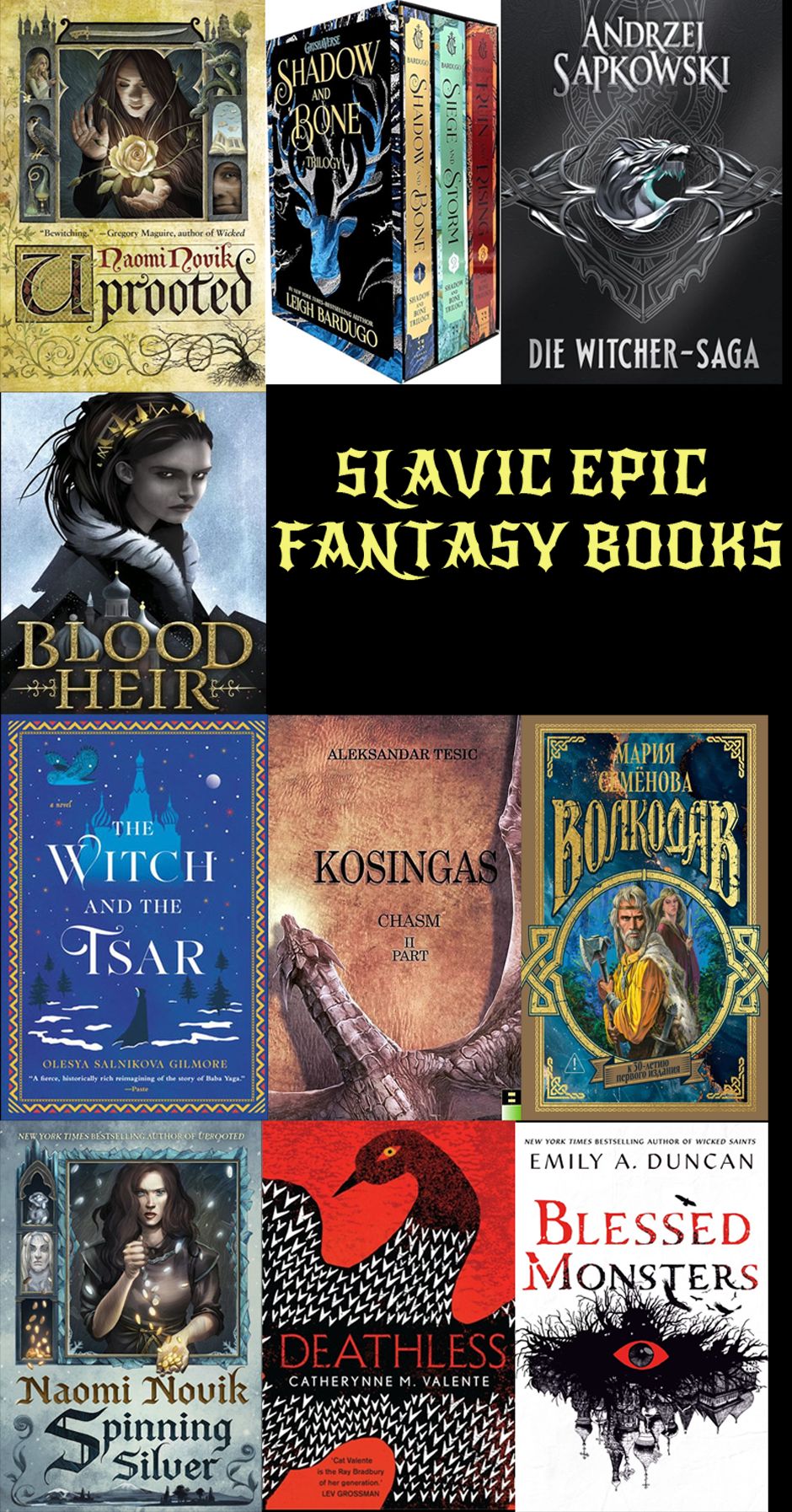
Katherine Arden’s Winternight Trilogy, beginning with The Bear and the Nightingale, feels like a love letter to the Slavic folklore I grew up fascinated by. Set in a harsh, medieval Rus’ where winter is not just a season but a living force, it follows Vasya Petrovna, a girl who can see the old spirits everyone else has forgotten. From the frost demon Morozko to his terrifying brother Medved, these beings aren’t abstract fantasy creatures, they feel pulled straight from fireside tales and half-remembered myths. Watching Vasya navigate family expectations, patriarchal traditions, and an encroaching, suspicious Christianity that denies the old ways felt painfully familiar and deeply authentic to the cultural tensions embedded in Slavic history.

What makes the trilogy truly epic for me is how it spans years, letting the stakes grow alongside Vasya herself. The struggle isn’t just against eternal winter, but against forgetting, forgetting the domovoi who guard the home, the rusalkas in frozen rivers, and the fragile balance between humans and spirits. Arden uses these folkloric elements to ground the story, so even as the magic intensifies and the fate of the land hangs in the balance, it never loses its roots. As a Slavic fantasy fan, the books hit that rare sweet spot: intimate and myth-soaked, yet grand enough to feel like a saga whispered by the snow itself.
Uprooted
Naomi Novik’s Uprooted instantly struck a chord with me as a Slavic fantasy fan, because its forest feels alive in the way old stories always warned it would be. The Wood isn’t just an enemy to be defeated; it’s a breathing, whispering presence steeped in the same uneasy magic as the dark forests of Slavic folklore. Agnieszka’s selection by the wizard known as the Dragon echoes the familiar rhythm of folktales, an ordinary village girl pulled into something vast and dangerous, armed with instinct, stubbornness, and a kind of magic that refuses to behave. The setting, with its small villages, suspicious peasants, and looming supernatural threat, feels rooted in an Eastern European sensibility rather than a generic fantasy backdrop.

Even though Uprooted stands alone, it earns its epic weight through the scale of its conflict and the intensity of its magic. The war against the Wood spreads across the kingdom, blurring the line between corruption and control, especially in contrast to the Dragon’s rigid, rule-bound sorcery. As someone drawn to Slavic myth, I loved how the story frames wild, emotional magic as something older and more truthful than polished spellcraft, dangerous, yes, but deeply human. It captures that classic folkloric tension between order and chaos, reminding me that in these stories, power is never clean, and the forest always remembers.
Spinning Silver
Naomi Novik’s Spinning Silver feels like a darker, colder folktale told by the hearth in deep winter, and as a Slavic fantasy fan, that atmosphere pulled me in immediately. Her reimagining of Rumpelstiltskin transforms Miryem’s ability to turn silver into gold into something sharp-edged and dangerous, especially once it draws the attention of the Staryk king, beautiful, inhuman, and bound to endless ice. The winters in Lithvas feel eternal in the way Slavic winters do in stories: not just weather, but a curse pressing down on the land. With figures like Chernobog lurking at the edges, the novel leans hard into the fear and reverence that old myths inspire, where bargains are never safe and survival requires both cleverness and iron resolve.

What makes Spinning Silver truly epic is its layered, multi-year narrative and shifting points of view. Through Miryem, Irina, and others, the story expands into a tangled struggle between humans, fae, and demons, with wars brewing and possession threatening to unravel entire kingdoms. I loved how Novik balances intimate, personal stakes, debts, marriages, quiet acts of defiance, with sweeping consequences that reshape the world. For me, the novel captures the essence of Slavic folklore at its best: cold, cunning, and morally complex, where endurance is a form of heroism and winter itself feels like an ancient, watching power.
Grishaverse Saga
Leigh Bardugo’s Grishaverse Saga scratches a very specific itch for me as a Slavic fantasy fan: that blend of imperial decay, mysticism, and looming catastrophe wrapped in fur-lined coats and bitter cold. From the moment the Shadow Fold splits the land, the world of Ravka feels steeped in a tsarpunk aesthetic that echoes Russian and Eastern European history, especially in its wars and border tensions reminiscent of Russian–Polish conflicts. Saints and their miracles are woven into everyday belief, blurring the line between religion and folklore in a way that feels culturally familiar rather than decorative. The presence of old powers beneath the state religion gave me the sense of forgotten gods and half-buried myths still shaping the fate of nations.

At the heart of it all is Alina Starkov’s journey as a Sun Summoner, but what makes the saga epic is how personal destiny collides with national survival. Her power doesn’t exist in a vacuum, it reshapes armies, redraws political alliances, and turns faith into a weapon. Across the trilogy and companion duologies, Bardugo expands the conflict into full-scale wars, revolutions, and moral reckonings, all infused with Slavic-inspired folklore and fatalism. For me, the Grishaverse captures that classic Slavic fantasy mood: grand, grim, and emotionally charged, where light is hard-won, history weighs heavily, and the cost of saving a country is never small.
Witcher Saga
Andrzej Sapkowski’s Witcher Saga is foundational for me as a Slavic fantasy fan, it feels less like a borrowed mythos and more like homegrown legend sharpened into something brutal and modern. From The Last Wish onward, Geralt’s world is one where monsters like striga crawl straight out of folktales I recognize, but they’re never the most frightening thing on the page. The Continent is soaked in mud, blood, and moral ambiguity, shaped by wars that grind ordinary people down while kings and mages scheme above them. Sapkowski’s voice, dry, cynical, and darkly funny, gives the setting a distinctly Eastern European edge that sets it apart from more idealized Western epics.

What elevates the saga into true epic territory is its long view of history and fate. Spanning decades, the story weaves together prophecy, political intrigue, and the slow extinction of elder races, all while twisting familiar Slavic myths through an Arthurian lens. Geralt, Ciri, and Yennefer are caught in forces far larger than themselves, yet constantly resist the roles destiny tries to impose on them. As a Slavic fantasy fan, I love how the series refuses clean heroism: magic has consequences, progress leaves casualties, and legends are built on compromise and loss. It’s epic fantasy stripped of romanticism, grounded in the hard truths and bitter wisdom of the region it draws from.
Deathless
Catherynne M. Valente’s Deathless feels like stepping into a dream woven from the threads of Slavic folklore, but set against the sharp, unforgiving backdrop of early Soviet Russia. Following Marya Morevna’s marriage to Koschei the Deathless, the story immerses the reader in a world where the magical and the historical collide seamlessly: bird wives flit between fairy tale and reality, while revolutionary upheaval reshapes the very ground beneath them. As a Slavic fantasy fan, I loved how Valente doesn’t simply retell myths, she inhabits them, letting the old tales breathe alongside political terror, hunger, and the relentless drive of history. Every chapter pulses with the strange logic of folklore, where love and death are bargains, not certainties.

The novel’s epic scope emerges in its blend of intimate emotion and sweeping historical change. Marya’s journey through love, loss, and the impossible quest for immortality mirrors the struggles of a nation, where magic is never free and power comes with a price. Valente layers myth and history so that battles between human and supernatural forces feel as urgent as the societal transformations raging across Russia. For me, Deathless captures that quintessential Slavic fantasy tension: a world that is simultaneously beautiful, cruel, and inexorably fated, where the past is alive in every frost-bitten corner, and the stories we inherit shape the lives we cannot escape.
Something Dark and Holy
Emily A. Duncan’s Something Dark and Holy (originally Wicked Saints) instantly draws me in as a Slavic fantasy fan because it’s drenched in the shadowy mysticism of Cyrillic folklore. The story follows Nadya, a cleric who communes directly with the gods, as she navigates the bloody, tension-filled lands of Tranavia and Kalyazin, caught between faith, prophecy, and her own fierce survival instincts. Opposite her stands Serefin, a blood mage prince whose dark powers mirror the morally gray magic of Slavic myths, where spells are never clean, bargains are treacherous, and even saints can be frightening. The war-scarred landscapes, ancient rites, and whispering gods make the novel feel like a fairy tale told through smoke and steel rather than light and gold.

What makes the story truly epic is its scope and the intensity of its conflicts. The century-long holy wars fueled by divine and blood magic are not just background, they shape every choice, every betrayal, and every alliance, reflecting the weight of history on individuals. Duncan layers multiple perspectives, secrets, and ancient grudges to show that power, whether divine or mortal, carries a terrible cost. For me, Something Dark and Holy captures the essence of Slavic fantasy at its darkest: a world where gods are real but capricious, where magic is beautiful and brutal, and where survival demands cunning, courage, and an understanding that even holy forces can be as dangerous as any human foe.
Blood Heir Trilogy
Amélie Wen Zhao’s Blood Heir Trilogy immediately resonates with me as a Slavic fantasy fan, thanks to its icy, imperial atmosphere and morally tangled intrigue. The story follows Ana, a princess with rare blood affinity, as she escapes an assassination attempt in the sprawling Cyrilian Empire. Her journey through shadowed streets and gilded courts feels like wandering through a world inspired by Tsarist Russia, where power is absolute, conspiracies are constant, and loyalty is as fragile as frost on a frozen river. Partnering with a cunning conman, Ana navigates treacherous plots that blend personal survival with the fate of entire kingdoms, giving the tale both intimate stakes and epic scope.

What makes the trilogy feel truly epic is the way Zhao escalates the danger from palace schemes to empire-wide threats, showing how one bloodline can tip the balance of nations. Magic, politics, and ambition intertwine, creating a world that feels alive with intrigue, betrayal, and the harsh beauty of Slavic-inspired landscapes. For me, Blood Heir captures that classic Slavic fantasy tension: survival is never guaranteed, power is double-edged, and even the smallest act of courage can echo across generations. It’s a story that balances heart-pounding adventure with the cold, unforgiving elegance of a world drawn from the same icy veins as Eastern European legend.
The Witch and the Tsar
Olesya Salnikova Gilmore’s The Witch and the Tsar is a dream come true for a Slavic fantasy fan, plunging Baba Yaga herself into the brutal, shadowed corridors of Ivan the Terrible’s court. The novel blends history and myth seamlessly, letting the legendary witch contend not only with tyrannical rulers and scheming nobles but also with gods and otherworldly forces pulled straight from Slavic folklore. The Tsar’s paranoia, the icy Russian winters, and the weight of courtly intrigue create a world that feels both terrifyingly real and mythically alive, where a single misstep can tip the balance between life and death, or doom entire cities.

What makes the story feel epic is the years-spanning scale of its conflicts and the intertwining of human and divine stakes. Baba Yaga’s battles are never just personal; they ripple across Ivan’s empire, threatening to ignite godly wars and reshape the very fate of Russia. Gilmore captures that perfect Slavic fantasy tension: where magic is cunning and dangerous, power is absolute but fleeting, and history itself feels alive with old, restless spirits. It’s a tale that combines the cold grandeur of imperial ambition with the wild, chaotic beauty of folklore, making every twist feel both inevitable and astonishing.
Kosingas Series
Aleksandar Tešić’s Kosingas Series, beginning with Red Zmaja, immediately captured my imagination as a Slavic fantasy fan, plunging me into a world where history and myth collide in glorious, fiery detail. The story follows Serbian knights of the Dragon Order as they face Hades’ hordes in the tense years leading up to the historic Battle of Kosovo, guided by a prophecy from a fire oracle. Tešić doesn’t shy away from Slavic folklore, weaving creatures like the fearsome zmey into epic battles, so that dragons, demons, and men fight side by side in a world that feels both legendary and rooted in the blood-soaked landscapes of the Balkans. The mix of heroism, prophecy, and dark magic gives the story a pulse that’s at once historical and mythic.

What makes the series truly epic is its scale and ambition: kingdoms clash, fates are decided on the battlefield, and the lives of individual warriors intertwine with the sweeping currents of destiny. Tešić blends human courage with supernatural terror, showing how mortals confront forces far larger than themselves, while Slavic myth shapes the very rules of war and heroism. For me, Kosingas perfectly captures the essence of Slavic fantasy, where history is alive with magic, legends walk alongside men, and honor and destiny are inseparable, leaving a lingering sense of awe and the thrill of stories passed down through generations.
Wolfhound Saga
Maria Semenova’s Wolfhound Saga (Волкодав) feels like the heartbeat of Slavic fantasy brought vividly to life, following the last warrior of the Grey Dogs as he embarks on a relentless quest for revenge. The saga immerses the reader in a world where gods lend strength, dark forces loom, and every fight carries the weight of both personal honor and ancestral legacy. Semenova’s landscapes, frozen forests, windswept steppes, and blood-soaked battlefields, echo the ruggedness of Eastern European myth, making the hero’s journey feel grounded yet mythic. The story resonates deeply for fans of Slavic lore, with its fierce warriors, supernatural aid, and a world where courage and cunning are the only shields against fate.

What makes the Wolfhound Saga truly epic is its sweeping scope and the intensity of its trials. From brutal duels to encounters with spirits and divine entities, the hero’s path stretches across kingdoms and centuries, blending heroic adventure with high fantasy stakes. Semenova captures that classic Slavic tension between human determination and cosmic forces, showing that even a single warrior can tip the balance in a world alive with magic and danger. For me, the series embodies everything I love about Slavic fantasy: a harsh, unflinching world, heroic deeds that test body and soul, and the ever-present influence of gods and legends on the mortal realm.
The Fifth God saga
When I wrote The Fifth God saga, my goal was simple: to craft a Slavic fantasy world that lingers in the imagination long after the last page. In L’ven, four supreme gods watch over crumbling empires, dragons soar across frost-bitten skies, and mortals confront impossible choices between love, loyalty, and survival. From Hagala’s dark return in Black Dragons to the fate of four orphans caught in a cosmic game, the saga blends epic battles, forbidden magic, and morally complex deities, all drawn from the myths and legends that first inspired me.

My deepest hope is that one day The Fifth God saga will sit alongside Winternight, The Witcher, and Uprooted, celebrated not just for its high stakes and adventure, but for its authentic Slavic heart. These are the stories I fell in love with, and I’ve poured that same passion into my own: tales where gods meddle, dragons hunt, and courage can tip the balance of worlds.
Trebate biti prijavljeni kako bi objavili komentar.